Showing posts with label Everything Changes. Show all posts

Thursday, July 21, 2011

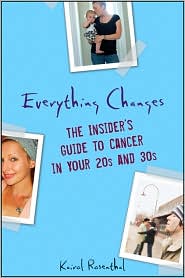
Everything Changes: The Insider's Guide to Cancer in Your 20s and 30s


Guilt, empathy, and intrigue are some of the feelings that I had as I read Everything Changes: The Insider's Guide to Cancer in Your 20s and 30s by Kairol Rosenthal. However, I needed to ask myself, did I miss something with my cancer experience? As I read thirteen chapters that delved into the lives of young adult cancer patients and survivors in their twenties and thirties, I got into the horrible habit of comparing their experiences with my own. OMG! There were survivors in this book who had it really bad. One turned to self-cutting, others had serial one night stands and slept around, went into deep depression, became suicidal, infertile, or drug addicted. Two had divorces. It was quite bleak! I felt guilty in some way that I did not experience those things and "got off easy". (If "easy" is defined as surgery, hypocalcemia, "going hypo", hyperthyroid, side effects, scarring, radiation, isolation, hormone replacement, long wait times for second opinions, lack of finances, unavailability of medication, uncertainties, loneliness, depression, and anxieties. I had issues with my insurance and getting coverage but it eventually came around, and that is a long eventually. I didn't say the guilt was logical.) I hate to do the comparison game but this is not your typical uplifting or inspiring cancer book in the sense that no one is running a marathon, climbing Mount Everest, or winning seven Tour de Frances but it is very insightful. (Sorry! Lance Armstrong often pops into my blogs lately.) Everything Changes is gritty, seedy, and dark. It is more like a documentary in which some of the characters you get so attached to die at the end (leaving children behind). The book paints a sadly sobering and realistic picture of cancer. Don't get me wrong. I'm glad I read this book (and I couldn't put it down finishing the 239 pages in two days). It was refreshing to read real stories about real people. But Kairol's subjects (the young adult cancer patients she interviews across the US) are going through some really tough "shit". Really "tough". Kairol, herself, has thyroid cancer which makes recurrences during the writing of this book. Ugh! It is tough. Kariol is tough too (and extremely opinionated telling off Louise Hay). Full of suggestions to make you into your own cancer advocate, access resources, and deal with "hard to discuss" stuff like sexuality and mental health and wise quotes from cancer survivors and patients, I was waiting for a bright light at the end of the tunnel. It didn't come. What did come is an increased sense of urgency for the plight of young adults with cancer. Since the year that Elvis died (1977, I know because I was born that year), there have been no improvements in the survival rates of young adults with cancer. The survival rates for children with cancer as well as older adults have both improved. Why? Young adults are diagnosed later since their symptoms are ignored and attributed to stupid shit like the flu or "the sexual positions" (page 170) they are using. Many doctors are saying to their sick young adult patients, "It's not cancer, you're too young to have cancer." They get diagnosed in stage 3 and 4 (which is pretty late) and they have different side effects to treatment. They are more likely to not have health insurance, especially since they are too old to be on their parents' and there is a gap of time between this and finding a stable career with health benefits. I also became more aware of the disparity between the US and Canada healthcare systems. Canadians get a minimum level of healthcare and even the drugs which are not covered by health insurance can be covered with a provincial health benefit. The path to get coverage in the US is a labyrinth. Sheesh! This is a desperate situation. No one, especially young adults who Kairol mentions have at least 2 decades of education invested in them with lots of talent and potential, should have to go through cancer alone or broke. This book did not give me "an uplift" like other materials designed for cancer patients yet it reminded me very much of the trenches I was in not too long ago as well as the varied experiences of my friends with cancer. Cancer patients can read this so they know they're not alone. Doctors and other health professionals should read this to learn about the huge psychosocial impact of cancer on young adults. Family and friends of cancer patients should read this to get inside their heads. This book helps me to realize and be so thankful for all of the support, resources, and people I had along my journey.

I almost forgot to mention that Kairol Rosenthal has a website and blog for Everything Changes. I had the pleasure of corresponding with Kariol recently and she even responded to my post Money Talks I. I decided to post her comment in a separate post called Money Talks II.

Coming up next: I've jumped on the "Crazy Sexy" bandwagon. See my reviews of the "Crazy Sexy Cancer" books coming soon.
Wednesday, July 20, 2011

Cancer Survivor Playlist #1


Destiny's Child with Da Brat - Survivor

I remember singing this song to myself in 2001 when I was working for the Francophonie Games in Ottawa and Gatineau. The reason? I was 23 years old and had moved to Gatineau, Quebec, a new city by myself where I knew no one. Since I was hired on Friday and had to start Monday, I had to find housing fast. The first place I found, I stayed for only three nights in what I learned was a rooming house in the rough side of town. (I will never forget the first night I got there when after I bought groceries, I ran onto the bus since there were three guys approaching me, catcalling and whistling at me.) There were a bunch of creepy looking dudes who lived there. (The landlord was a mess.) My room reaked of stale cigarette smoke and I slept with a chair against the locked door to reinforce my safety. Plus there was no air conditioning and I lived on apples, box juices, and peanut butter sandwiches because I had very little money. I had to move. One night, I found a much safer place where I lived in Gatineau with a single mom and her pre-teen daughter. She took my word for it that I would pay after I moved in. She trusted my word that I would giver her part of the rent as soon as I got paid and the rest at the end of the month. Imagine that? I moved in quickly (much earlier than she had planned to have tenants). My new place which was the top level of her house was hot like a sauna (no airconditioning) and smelled like cat pee (she did not have enough time to shampoo the carpet before I moved in. Plus, I worked and lived in an all-French environment which is not my first language. I was forced to adapt, maintained my faith, and I survived as things did improve-- I had fans to cool the rooms slightly, shampooed carpets to alleviate some of the cat pee smell, and an awesome work experience in which I improved my French and worked with talented world musicians.) This Destiny's Child song was really popular at the time and became my anthem for overcoming that adversity.

On another note: I did get the results of my 2 whole body scans and 2 blood tests. Yesterday, I went to see Endo #4 (my endocrinologist) and asked him if I was in remission. He said, "No. It's a cure." Yes! I thought. I see him again in 6 months for blood tests. I asked him if I would need to repeat the radiation again. He said no, but I will need to do blood tests. (I know about the blood tests. They will be a regular part of my life. I'm pretty rehearsed in them now.)

I'm a little hyper ("hyperthyroid", that is) though, according to the results. After this bottle is done, I will have to start a slightly lower dose of thyroid hormone. I have been feeling a lot more energy lately. I asked if that would change. Endo #4 told me that I should not notice any difference.

Nevertheless, I am still processing this whole experience. (Naturally!) Cancer. Survivor. Cancer survivorship.

Was that it? I am reading Everything Changes by Kairol Rosenthal and I actually felt a little guilty since I did not experience all of the difficulties that other young adult cancer patients often experience-- chemo, lengthy radiation program, months in the hospital. I was not single during this process. I have a fiance. I have a job and career. I have lived some and achieved many of my dreams before cancer. I did not deal with cancer through self-cutting or drug abuse or sleeping around... I also did not win 7 tour de Frances like Lance Armstrong or run a marathon (yet, anyway). My experience was very different.

My whole body scan report said "unremarkable" about the residual focus in the neck and "no evidence of metastic disease". That's the clincher.

Yet, I am thrilled to be "on the other side" of my diagnosis. I have learned so much and will continue to learn. I am also thankful to God and my faith has sustained me through this. I am so thankful for the wonderful programs at Young Adult Cancer Canada (YACC), Wellspring, Princess Margaret Hospital (PMH), and Gilda's Place. I will continue to take advantage of them because I understand that cancer-free is still a journey. I am also thankful to my fiance, friends and family who have been supportive and responsive and "there" for me. I am thankful to the many cancer survivors and patients who I have met who have inspired me to live better and more courageously. Thank you so much. Lastly, thank you to all of the readers of this blog (all 8, 765 of you). When I began my blog on April 8, I was so unsure about putting my thyroid cancer story out there yet I was willing to share it with you. Thank you to those who have left comments and others who reached out to me. I am so glad that you are inspired by my journey and even happier it has helped many survivors. I assure you that the blog has helped me too. Thank you, thank you, thank you.

I am deciding today to do a Cancer Survivor Playlist for the next few days as I process my survivorship.

Monday, July 4, 2011

Money Talks II


The Ojays - For The Love of Money LIVE, 1974!! I remember hearing my dad play this O'Jays' classic as I grew up.

After posting Money Talks I, I received an excellent and detailed commentary from Everything Changes: The Guide to Young Adult Cancer in Your 20s and 30s author Kariol Rosenthal. (You can check out her blog and learn more about her book here.)


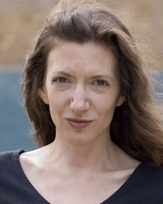
Kairol Rosenthal, author of Everything Changes: The Guide to Young Adult Cancer in Your 20s and 30s

This was very exciting for me because I love comments and plus it also comes from not just an established author, but an established Thr'yvor, cancer survivor author. I decided to do Money Talks II and post her commentary about the "Cancer diagnosis as a risk for bankruptcy" article. Kairol's commentary is worth a read and she also gives an American perspective on the topic. I have posted her comments below.

Kairol Rosenthal's Comments to my post Money Talks I
Great post. I’ve been mulling this over and have come up with a few hypotheses too. I wonder what you think:

1. Thyroid Cancer has a higher survival rate.

Thyroid cancer has overall survival rates much higher than most other cancers. (According to the National Cancer Institute, 10-year overall relative survival rates for patients in the United States are 93% for papillary cancer, 85% for follicular cancer, 75% for medullary cancer, and 14% for undifferentiated/anaplastic cancer.) Because we have much longer to live than patients with many other kinds of cancers, we have more time for bills to rack up and more time to go into debt and need to file for bankruptcy. For example, I have had the good fortune of racking up more medical bills for my thyroid cancer than my friend Erica, whose particular form of brain cancer had a 2% survival rate. She died less than two years after diagnosis, and ya can’t file for bankruptcy when you are dead.

2. Faster recovery times.

Most thyroid cancer patients are able to go back to work fairly soon after treatments such as surgery and radioactive iodine. (My recovery too way, way longer, but I know I’m not the norm.) Because many of us continue to work through out our disease course, I bet that lots of US citizens with thyroid cancer, who are still working and earning an income, don’t qualify for government assistance like Medicaid, or other financial relief based on income. So I wonder if it could be because we are more so often physically able to work as compared to other cancer patients that we don’t as often qualify for government assistance, have to pick up more of the costs ourselves, and therefore file for bankruptcy more often.

3. The Asian factor.

This study was limited to only the western half of one state in the United States. I think the study should be called ‘Cancer As Risk factor for Personal Bankruptcy in Western Washington State’. There might be so many factors that pertain to western Washington, and not to other geographic locations, that account for the thyroid cancer being the second highest rate of bankruptcy. For example, at 16%, the Asian population in the Seattle-Tacoma area is much, much larger than elsewhere in the United States. Being Asian is one of the top-five risk factors listed for getting thyroid cancer. Is a higher percentage of the thyroid cancer population in western Washington Asian? And if so, are there cultural factors that could impact why Asians would also have higher bankruptcy rates, such as higher rate of uninsured, or overall lower incomes? I don’t know the answers to these questions, but do wonder if issues like this contribute to the outcomes of the study showing thyroid cancer as the second highest cancer group to file for bankruptcy. I hope this study has garnered enough interest for it to be repeated in a way that accounts for geography and population factors.

4. Predisposition to bankruptcy prior to diagnosis.

It was interesting to see that although thyroid cancer was the second most often filed for bankruptcy, lung cancer was still DOUBLE that of thyroid cancer. The two highest risk factors for lung cancer are smoking and exposure to second hand smoke and to other caustic materials and elements like asbestos and nickel. Smoking rates are almost double among people living below the poverty level and exposure to caustic materials is also much higher among the poor. So it seems possible that poorer people have a higher chance of getting lung cancer. This is a factor that the study does not consider. And it makes me wonder if there could be similar factors that could predispose the population in western Washington to higher rates of both thyroid cancer and poverty.

Thanks again for giving me much to think about.

Kairol


July 2, 2011 2:25 PM